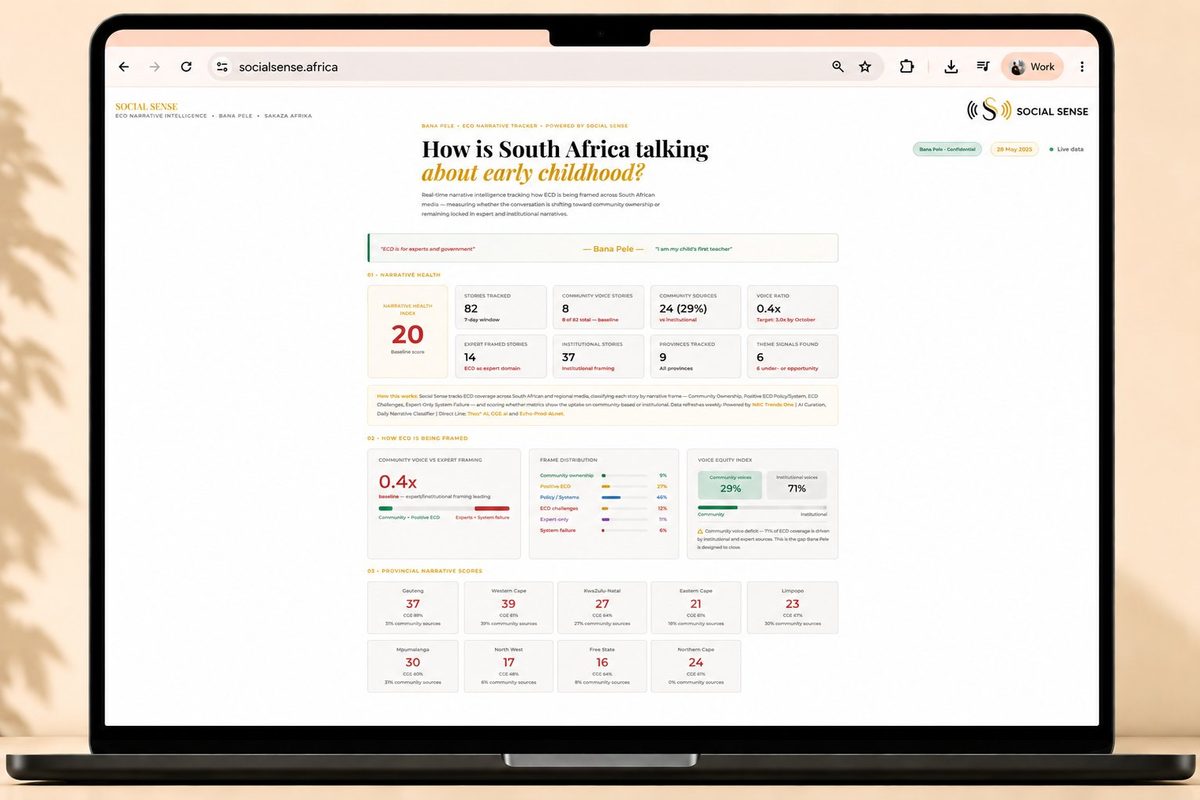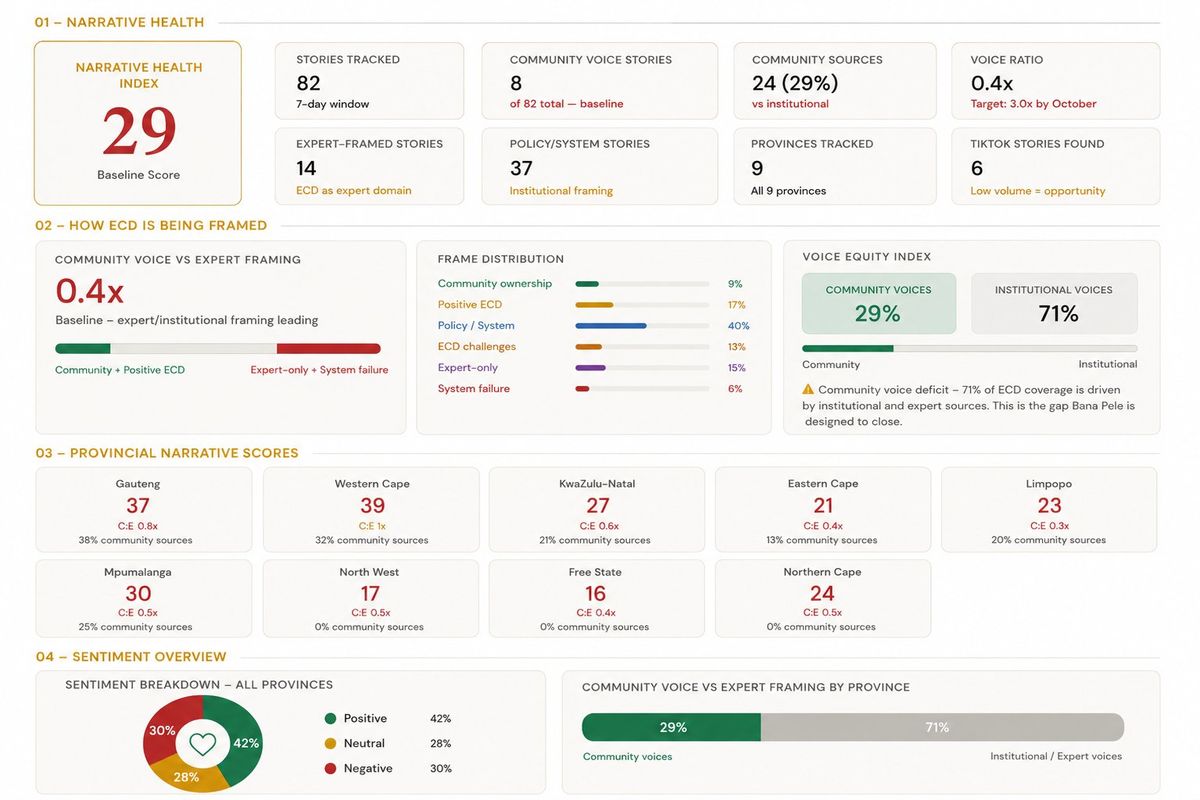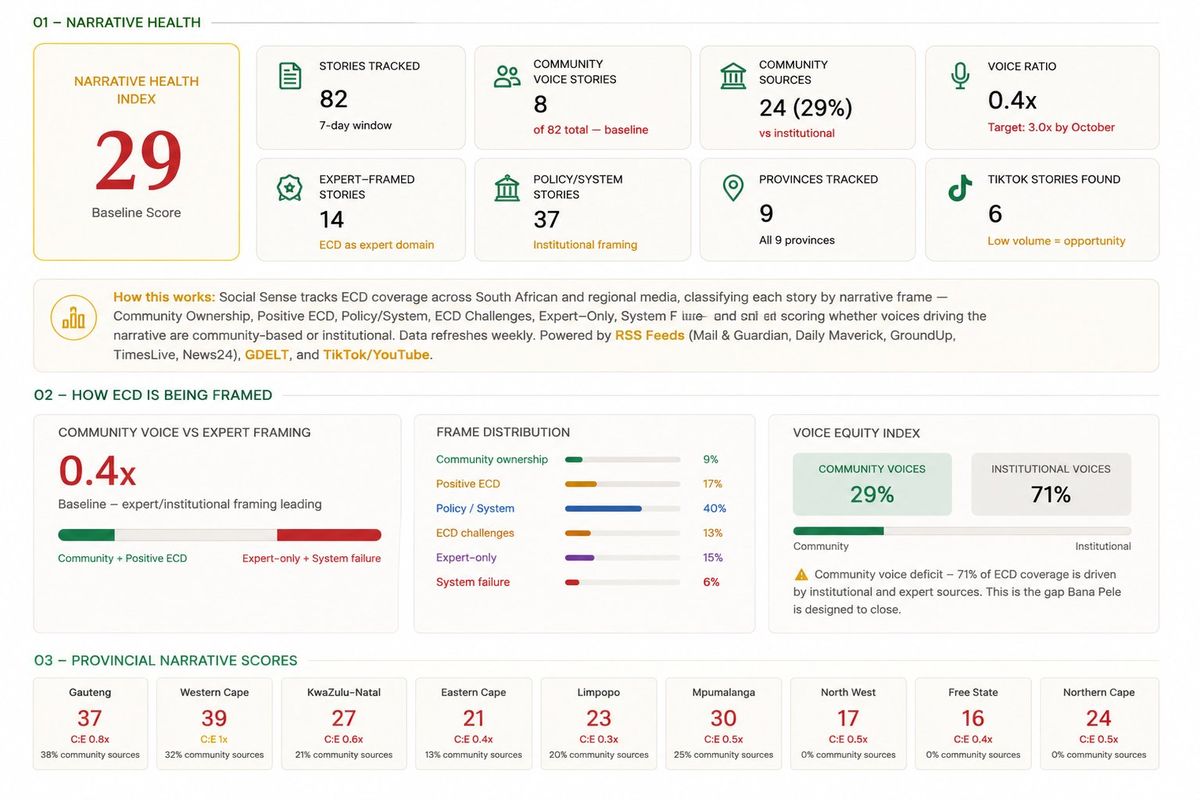
Research into Early Childhood Development in South Africa and the world shows that this contribution is often ignored in mainstream approaches to child education. Statistics South Africa found that 50.2% of children aged 0–4 stay at home with parents or guardians, while only 36.8% attended ECD programmes. Research cited by UNICEF South Africa shows that attendance at ECD centres for children under five has grown from 1 in 10 children in 2002 to 1 in 3 today — meaning a significant proportion of early learning still happens in homes and community environments.
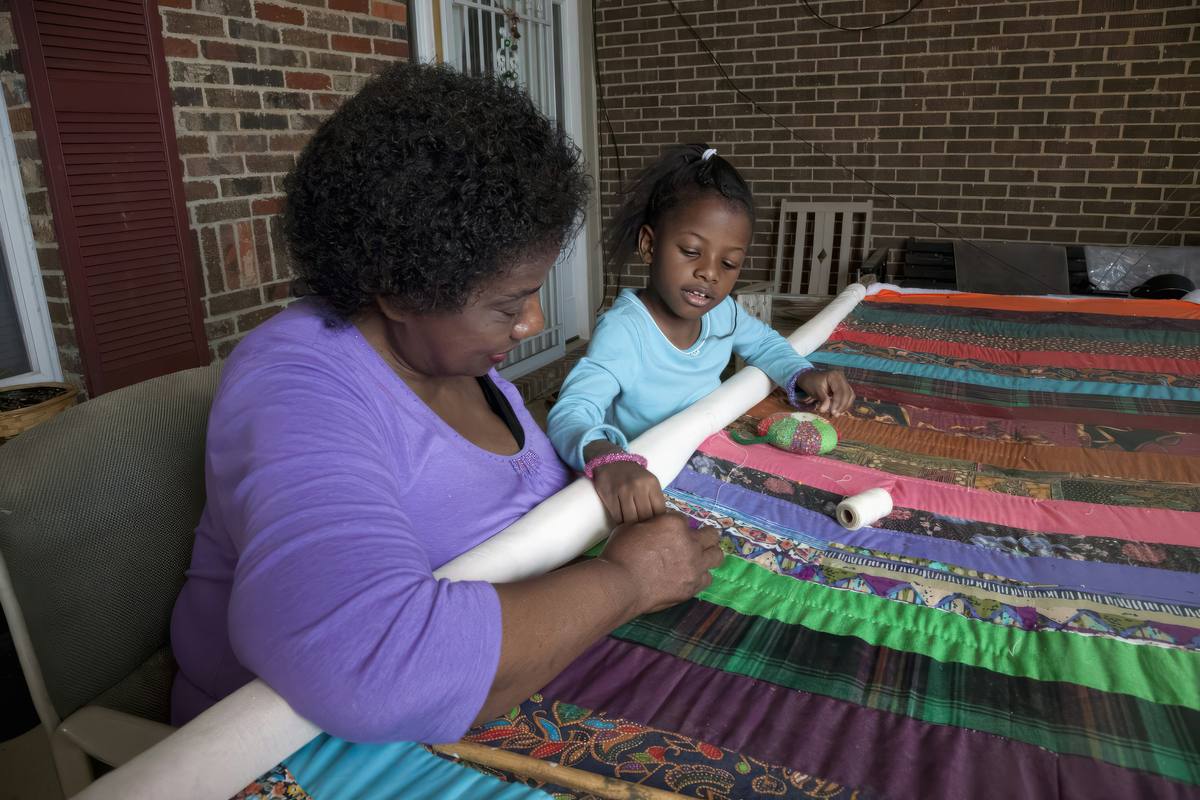
The South Africa G20 briefing positions ECD as a "whole-of-society effort," recognising that caregivers, families, communities, and informal support systems play a central role in achieving universal access. The Tshikululu Foundation notes that caregivers are "the first and most important teachers" in a child's development, playing a critical role in children's intellectual, emotional, and social development.
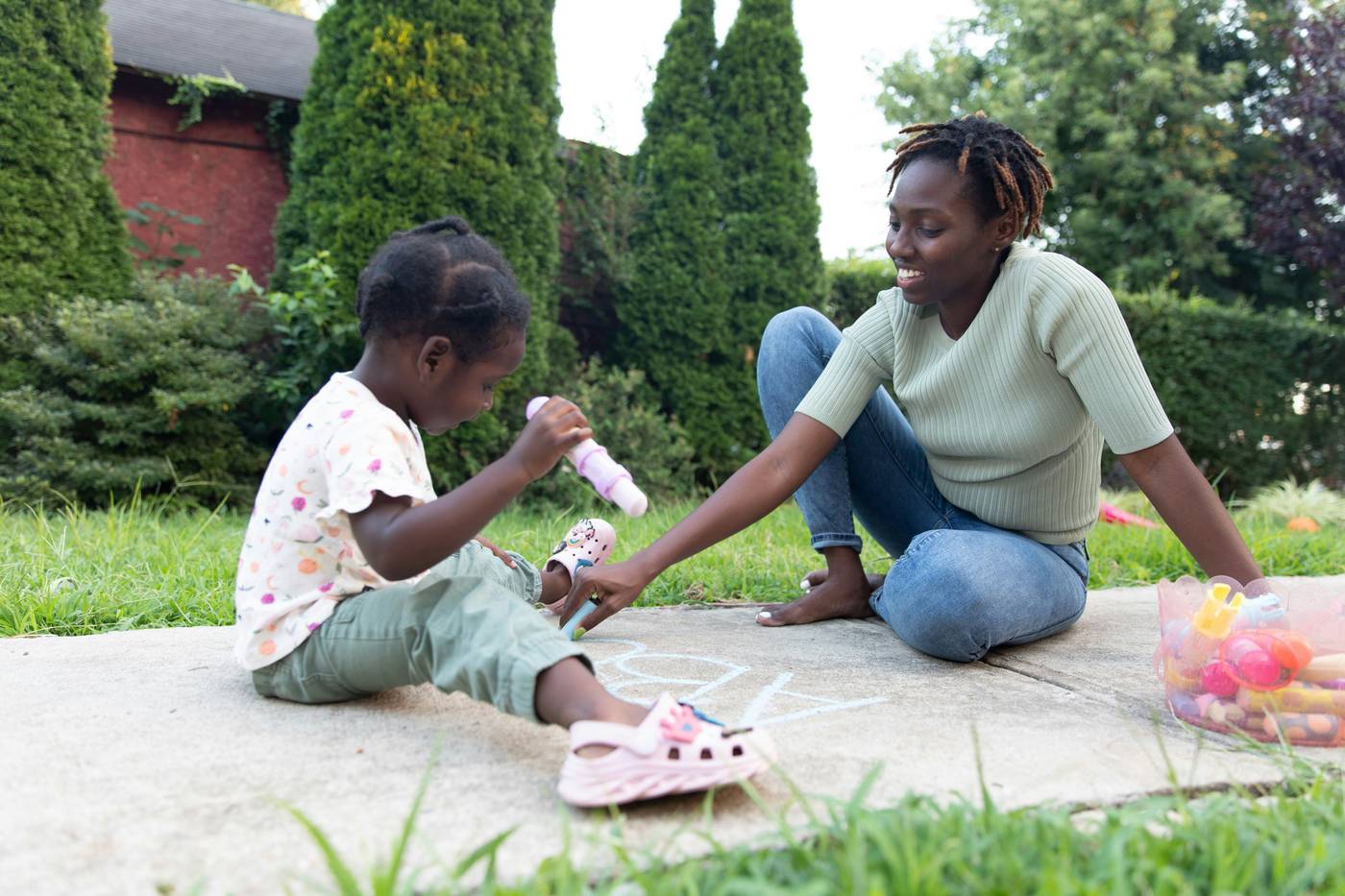
The opportunity here is therefore not simply to introduce ECD into communities — but to help communities recognise the role they already play within it. This creates a powerful narrative opportunity: to shift caregivers from seeing ECD as something delivered primarily by institutions and experts, toward recognising that everyday caregiving interactions are themselves part of a child's learning journey. Within this context, TikTok provides a uniquely participatory platform for making invisible caregiving behaviours visible, relatable, and socially reinforced at scale.